
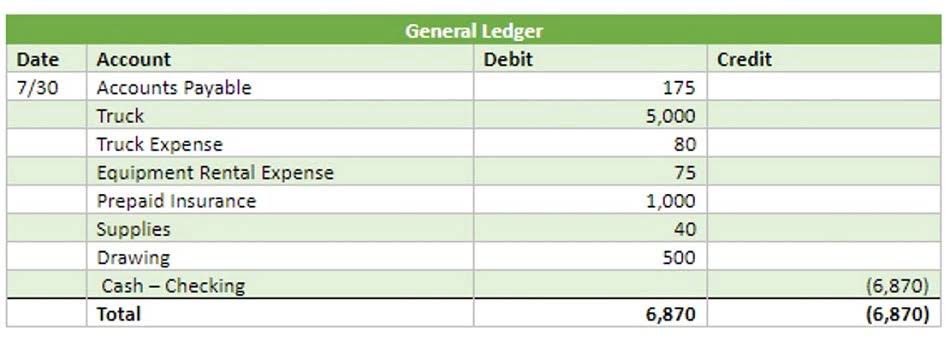
For those still using ledgers and spreadsheets, you’ll also be recording the entry manually, but in your ledgers, not in your software. Knowing how to record depreciation in a journal entry and calculate it per fixed asset can help you understand how depreciation affects your financial statements. For businesses, depreciation can be used for planning and tax-saving purposes. With enough knowledge, business owners will not have a hard time understanding how depreciation impacts net income and net assets. Depreciation is the gradual charging to expense of an asset’s cost over its expected useful life.
- Let’s assume that ABC Co bought machinery for its manufacturing production of $50,000.
- Most of the people who arerelated to financial sector are actually familiar with this term.
- Whether you maintain the provision for depreciation/accumulated depreciation account determines how to do the journal entry for depreciation.
- Therefore, we may safely say that the straight-line depreciation method helps in the process of accounting in more ways than one.
- After almost a decade of experience in public accounting, he created MyAccountingCourse.com to help people learn accounting & finance, pass the CPA exam, and start their career.
So, the manufacturing company will depreciate the machinery with the amount of $10,000 annually for 5 years. The company takes 50,000 as the depreciation expense every year for the next 5 years. Revisiting the formula of the Straight-line depreciation method, we shall also look into the steps of calculation.
Depreciation With Residual Value
In this case, the asset account stays recorded at the historical value but is offset on the balance sheet by accumulated depreciation. Accumulated depreciation is subtracted from the https://www.bookstime.com/ historical cost of the asset on the balance sheet to show the asset at book value. Book value is the amount of the asset that has not been allocated to expense through depreciation.
However, the expenditure will be recorded in an incremental manner for reporting. This is done as the companies use the assets for a long time and benefit from using them for a long period. Therefore, although depreciation does not exhibit an actual outflow of cash but is still calculated as it reduces companies’ income; which needs to be journal entry for depreciation estimated for tax purposes. Businesses can recoup the cost of an asset at the time it was purchased by calculating depreciation. The process enables businesses to recover the cumulative cost of an asset over its life rather than just the purchase price. This also enables them to substitute future assets with an adequate amount of revenue.
Estimating Useful Life and Salvage Value
This method helps to estimate the overall consumption pattern of the asset. Owing to its ability to its simple presentation and reduced chances of errors, the method is highly recommended. You can also contact us if you wish to submit your writing, cartoons, jokes, etc. and we will consider posting them to share with the world! The Facebook and LinkedIn groups are also good areas to find people interested in accounting like yourself, don’t hesitate to join as everyone of all levels are welcome to become part of the community. My Accounting Course is a world-class educational resource developed by experts to simplify accounting, finance, & investment analysis topics, so students and professionals can learn and propel their careers.
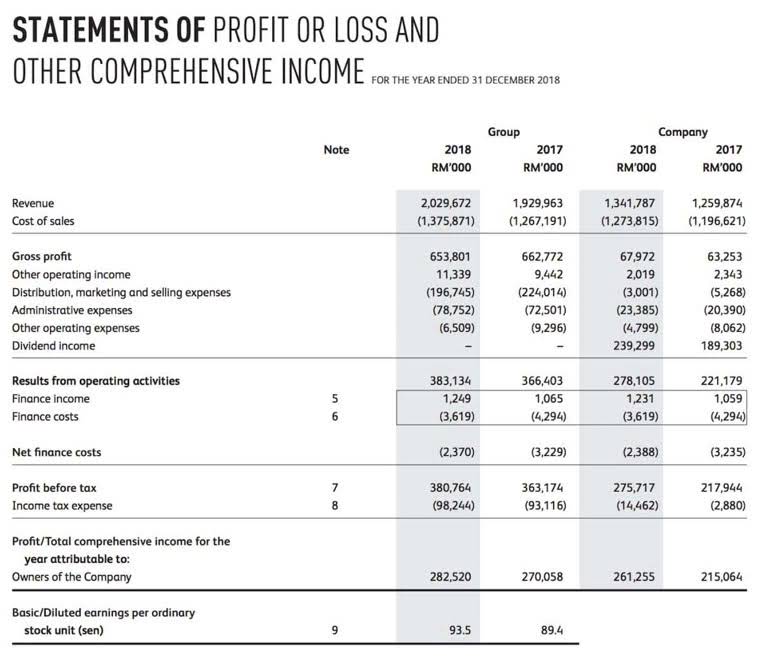
For example, ABC Company acquired a delivery van for $40,000 at the beginning of 2018. The entire amount of $40,000 shall be distributed over five years, hence a depreciation expense of $8,000 each year. In the Spivey example, we assumed that the assets were purchased on the 1st day of the month, but of course, that is not usually the case. Doing asset depreciation manually, even for seasoned professionals, is prone to error. To illustrate this, we assume a company to have purchased equipment on January 1, 2014, for $15,000. Here, the company does not estimate a salvage value for the equipment.
From Theory to Practice: Real-Life Letter of Credit Examples
When recording this expense, we use another account called accumulated depreciation. The accumulated depreciation is a contra account of fixed assets and the balance is carried forward throughout the life expectancy. The accumulated depreciation is deducted from the cost of the assets to find the net book value of the fixed assets.
- We need to ensure the creation of a contra asset account via the chart of accounts for accumulated depreciation before recording a journal entry.
- Instead, depreciation is merely intended to gradually charge the cost of a fixed asset to expense over its useful life.
- When assets are purchased, they are recorded at their historical cost in an asset account on the balance sheet.
- Another type of fixed asset is natural resources, assets a company owns that are consumed when used.
- The initialpurchase can be record by debiting the asset and crediting the amount paid for it in thecredit account.
- And in this blog post we will go through the Journal Entries for Depreciation.
